Odor Removal and Deodorization in Santa Maria
Odor removal and deodorization in Santa Maria and surrounding areas. IICRC-certified, insurance billing accepted. Call (805) 345-7440.
A week after the fire is out — or the floodwater recedes, or the tenant moves on — the smell is still there. It’s in the drywall, the carpet pad, the HVAC ducts, the furniture fabric. Surface cleaning masks it for a few days, then humidity or heat pulls it back out. Professional odor removal and deodorization isn’t about spraying something that smells better; it’s about neutralizing the odor molecules embedded in porous materials before they become a permanent fixture in your home or building.
What odor removal and deodorization actually involves
Odor molecules don’t sit on top of surfaces — they bond to them. Smoke residue from a kitchen fire penetrates drywall paper and insulation. Pet urine crystallizes in subfloor wood and concrete. Mold off-gassing saturates HVAC systems. Each odor source has a different chemical signature, which is why a single product or method almost never solves the problem.
Effective professional deodorization uses a combination of techniques selected for the specific odor type and the materials affected:
- Thermal fogging — a deodorizing solvent is heated into a fine fog that follows the same pathways smoke or odor traveled during the loss event, reaching inside wall cavities, under flooring, and into upholstery.
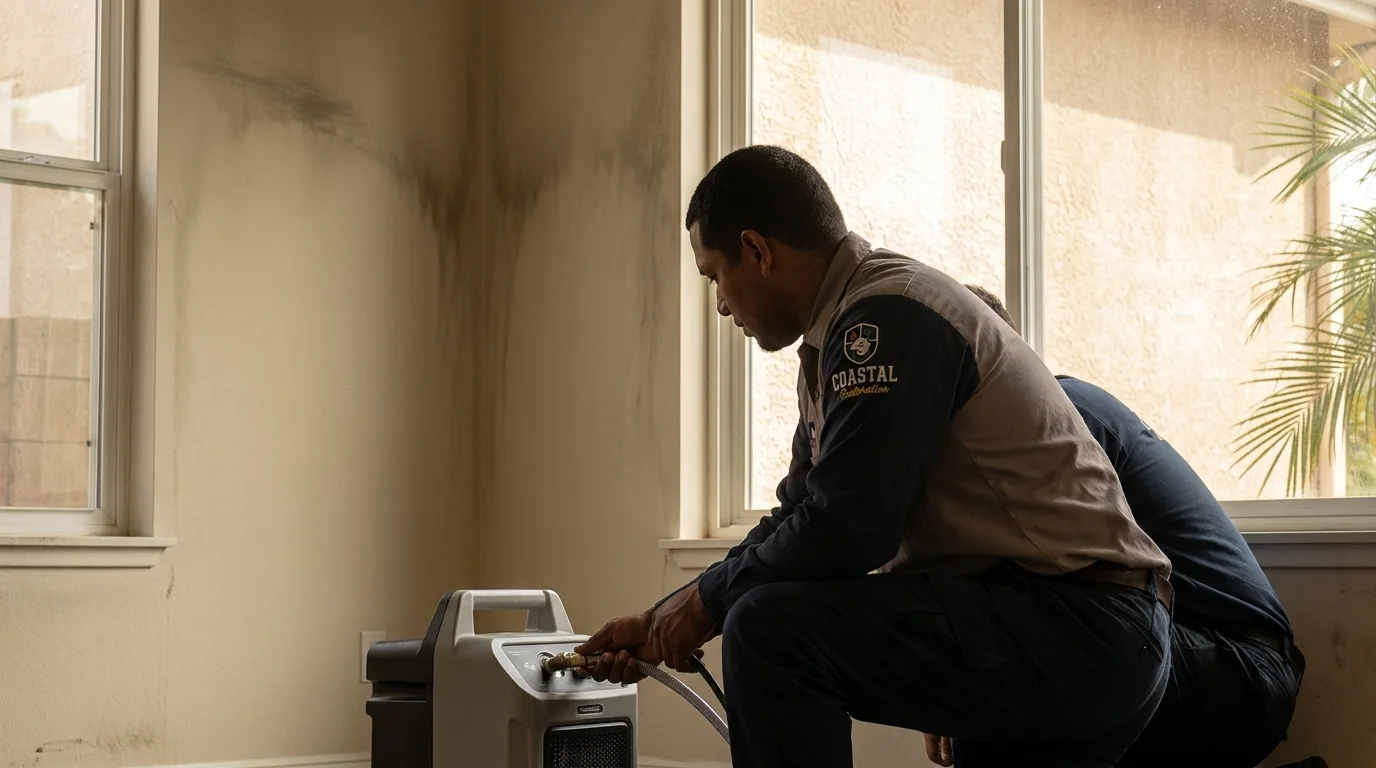
- Ozone treatment — ozone generators produce O₃, which oxidizes and breaks down odor-causing compounds at the molecular level. Highly effective on smoke and biological odors; requires the space to be vacated during treatment.
- Hydroxyl deodorization — hydroxyl generators replicate the natural atmospheric process that breaks down VOCs. Unlike ozone, hydroxyl treatment is safe to run in occupied spaces and works well on contents that can’t be moved.
- Encapsulation and sealing — on heavily affected porous surfaces (framing, concrete, subfloor), an odor-blocking sealant locks in residual compounds after treatment so they can’t off-gas back into the living space.
Timelines vary. A single-room smoke odor from a contained fire might resolve in one to three days of treatment. A whole-house pet odor embedded in flooring, subfloor, and HVAC can require a week of staged treatment, subfloor replacement, and duct cleaning before clearance.
Our process
-
Source identification and odor mapping — before any equipment is placed, the affected areas are inspected to identify every odor source: char, smoke migration paths, saturated materials, HVAC contamination. A treatment plan that skips a source will fail.
-
Contaminated material removal — odor-saturated materials that can’t be deodorized (heavily charred drywall, urine-soaked carpet pad, mold-damaged insulation) are removed before deodorization begins. Treating over them wastes time and money.
-
Primary deodorization treatment — thermal fogging, ozone, or hydroxyl generation is deployed based on the odor type, the materials present, and occupancy requirements. In most fire-loss scenarios, thermal fogging is applied first, followed by an ozone cycle.
-
HVAC and duct deodorization — odor-laden air has cycled through the duct system. Ducts are cleaned and treated separately; skipping this step is one of the most common reasons odor returns after treatment.
-
Verification and clearance — after treatment, the space is aired out and inspected. If odor is still detectable, the source is re-examined and treatment is repeated or adjusted before the job is closed.
What separates a good deodorization response from a bad one
The most common failure is treating the symptom instead of the source. A contractor who applies ozone or hydroxyl to a space without removing saturated materials first is essentially deodorizing the odor molecules that are actively off-gassing — as soon as the equipment is removed, the remaining source continues to emit. Insurance adjusters reviewing a re-submitted claim for persistent odor will look for documentation that source materials were identified, removed or sealed, and that treatment was method-appropriate for the loss type.
Ozone is frequently misused. It’s powerful on smoke odors but can damage rubber seals, certain plastics, and artwork if concentrations are too high or dwell time is too long. It also cannot be used in occupied spaces — any contractor running ozone with people or pets present is operating unsafely.
Another missed step: contents. Furniture, clothing, and soft goods absorb odor just as readily as structural materials. A home that smells clean until the furniture is moved back in is a deodorization job that wasn’t finished. Contents deodorization — either on-site with hydroxyl or off-site in a controlled chamber — is part of a complete scope.
Coastal Restoration Services Inc is an IICRC Certified Firm, and our technicians hold WRT and ASD credentials. License #11245226.
What does odor removal and deodorization cost?
Typical costs run from a few hundred dollars for a single-room treatment to several thousand for whole-house fire or pet odor remediation involving structural work. Most homeowners pay somewhere in the middle — the variables are square footage, odor type, number of treatment cycles required, and whether contents or HVAC work is in scope.
| Scenario | Typical industry range |
|---|---|
| Single room, smoke odor (contained fire) | $400 – $1,200 |
| Whole-house smoke odor, no structural damage | $1,500 – $4,500 |
| Pet urine odor with subfloor treatment | $1,200 – $5,000+ |
| Mold off-gassing, post-remediation deodorization | $600 – $2,000 |
| Sewage or biohazard odor, contained area | $800 – $2,500 |
| Whole-house fire loss, contents and HVAC included | $3,500 – $10,000+ |
These are typical industry figures — every loss is different, and Coastal Restoration Services Inc provides a written scope of work before any work begins so there are no surprises. Homeowners insurance typically covers odor remediation when it results from a covered peril (fire, smoke, water intrusion, or sewage backup), and we handle the documentation and work directly with your carrier.
Seasonal and regional considerations
Santa Maria’s Central Coast climate is mild but not odor-neutral. The marine layer that rolls in from the Pacific keeps indoor humidity elevated through spring and early summer — and humidity reactivates odor compounds that seemed resolved in drier conditions. A home treated for smoke odor in February may smell again by May if encapsulation wasn’t part of the scope.
Wildfires in San Luis Obispo and Santa Barbara counties push smoke into structures even when homes aren’t directly in the fire path. HVAC systems running during a regional smoke event pull particulate into ductwork, and that embedded smoke odor can persist for months without professional duct treatment.
Service area
Coastal Restoration Services Inc is based in Santa Maria and serves communities throughout the Central Coast, including Lompoc, Orcutt, Guadalupe, Arroyo Grande, Pismo Beach, San Luis Obispo, and Santa Barbara. Each city-specific service page links back here for the full technical detail on our deodorization process.
If your home or property still smells — days, weeks, or months after the original event — call (805) 345-7440 to schedule a deodorization assessment. We’ll identify every odor source, explain the treatment options, and give you a written scope before any work starts.
Frequently Asked Questions
Does homeowners insurance cover odor removal and deodorization?
What's the difference between ozone treatment and hydroxyl deodorization, and when is each used?
Why does the smoke smell come back after I thought it was gone?
Does the HVAC system need to be treated separately, or does whole-house deodorization cover it?
How many treatment cycles does a typical deodorization job require?
Looking for the best odor removal and deodorization company in Santa Maria?
Coastal Restoration Services Inc provides odor removal and deodorization in Santa Maria, CA and the surrounding area. Customers rate us 5.0 out of 5 stars across 29 Google reviews. We answer calls 24/7 — call (805) 345-7440 for immediate help.
Need Odor Removal and Deodorization now?
We respond 24/7 across Santa Maria and surrounding CA cities.
Related Coverage
- Our Restoration Services
- Contact Coastal Restoration Services Inc
- Odor Removal and Deodorization in Arroyo Grande
- Odor Removal and Deodorization in Atascadero
- Odor Removal and Deodorization in Avila Beach
- Odor Removal and Deodorization in Ballard
- Odor Removal and Deodorization in Blacklake
- Odor Removal and Deodorization in Buellton
- Odor Removal and Deodorization in Callender
- Odor Removal and Deodorization in Cambria
- Odor Removal and Deodorization in Edna
- Odor Removal and Deodorization in El Paso de Robles
- Odor Removal and Deodorization in Grover Beach
- Odor Removal and Deodorization in Guadalupe