Odor Removal and Deodorization in Nipomo
Odor removal and deodorization in Nipomo, CA. IICRC-certified, insurance billing accepted. Call (805) 345-7440.
Our technicians are dispatched from our Santa Maria, CA headquarters and are typically on-site in Nipomo within 60 minutes of your call.
Nipomo sits in a coastal-influenced corridor where marine layer mornings give way to warm afternoons, and that daily humidity swing does something most homeowners don’t expect: it drives odors deeper into porous materials. Smoke residue from a kitchen fire, pet dander embedded in carpet padding, or the musty aftermath of a slow slab leak — all of these get cycled and re-released every time the fog rolls in off the Pacific and moisture levels climb. Coastal Restoration Services Inc responds to odor calls throughout Nipomo and the surrounding San Luis Obispo County communities, bringing industrial-grade deodorization equipment and a methodical process that addresses the source, not just the surface smell.
Why Nipomo Properties Hold Odors Longer
Nipomo’s climate sits in a narrow band between the drier Santa Maria Valley to the south and the more consistently marine-influenced coast to the west. That means relative humidity inside homes can swing 20 to 30 points between early morning and mid-afternoon on a typical spring or fall day. Odor molecules — particularly from smoke, protein fires, and biological sources — bind to soft materials when humidity is high and volatilize again when conditions dry out. The result is a smell that seems to disappear and then return, sometimes weeks after a homeowner thought the problem was solved.
Nipomo also has a significant stock of ranch-style homes and agricultural worker housing built in the 1970s and 1980s that used lower-density drywall and fiberglass batt insulation. Both materials are highly absorbent. A single smoke event or a pet odor that’s been building for years can penetrate wall cavities and subfloor assemblies in ways that surface sprays and candles will never reach. Identifying how far contamination has traveled — with moisture meters, thermal imaging, and air sampling — is the first step before any treatment begins.
Our Odor Removal and Deodorization Process in Nipomo
Every job starts with a source assessment. Masking an odor without eliminating its origin is a short-term fix that always fails. Once the source is confirmed and any underlying damage (water intrusion, fire char, biological material) is addressed, the deodorization phase begins.
Depending on the severity and the type of odor, the team deploys one or more of the following methods:
- Thermal fogging — a solvent-based or water-based fog is heated and dispersed to penetrate the same pathways smoke or odor traveled. This is particularly effective in Nipomo homes where smoke has migrated into wall cavities or attic spaces.
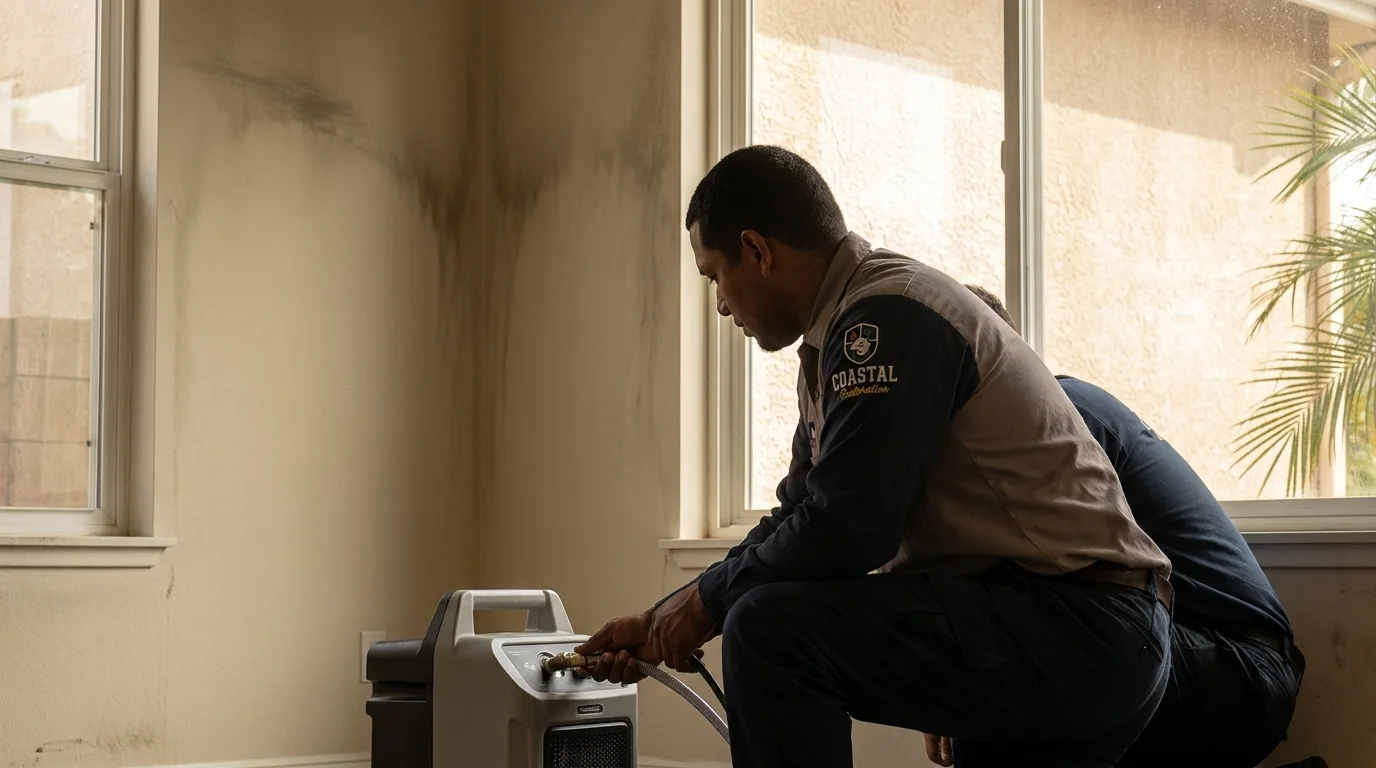
- Hydroxyl generation — hydroxyl generators produce reactive molecules that break down odor compounds at a molecular level without requiring occupants to vacate for extended periods. Useful in occupied properties or where ozone is not appropriate.
- Ozone treatment — high-concentration ozone is introduced into a sealed, unoccupied space to oxidize odor-causing compounds. Highly effective for severe smoke odor or longstanding pet contamination, but requires proper clearance time before re-entry.
- HEPA air scrubbing — continuous air filtration removes particulate matter that carries odor, often run in tandem with other methods.
The IICRC-certified technicians on our team select the method — or combination of methods — based on the material types present, the odor source, and the occupancy status of the property.
Equipment and Methods Calibrated to Coastal Conditions
In a climate like Nipomo’s, equipment selection matters more than in drier inland markets. Ozone treatment, for example, is less effective when ambient humidity is above 60% — which is common during Nipomo’s morning marine layer hours. Scheduling ozone treatments for the drier afternoon window, or using dehumidification equipment to lower interior humidity before treatment, can significantly improve outcomes. Hydroxyl generators are less humidity-sensitive and are often the better choice for jobs that need to run continuously over multiple days.
Thermal fogging in homes with open-beam ceilings or exposed rafter systems — a style common in Nipomo’s older ranch properties — requires careful nozzle placement to ensure the fog reaches high corners and roof-deck assemblies where smoke stratifies. These are the details that separate a thorough job from one that leaves a faint smell six months later.
Local Note
Nipomo’s agricultural heritage means a portion of the housing stock includes converted outbuildings, granny units, and older accessory structures that were not originally permitted as living spaces. These buildings often lack vapor barriers and have dirt or aggregate subfloors, which act as reservoirs for biological odors — particularly from rodent activity or long-term moisture. Standard deodorization protocols designed for finished residential interiors don’t translate directly to these spaces. When a call comes in from a property with an unfinished or semi-finished structure, the assessment process accounts for subfloor and crawlspace conditions before any treatment is recommended.
Reaching Nipomo from Santa Maria
Coastal Restoration Services Inc is based in Santa Maria, which puts Nipomo a short drive south on US-101. For scheduling and service inquiries, call (805) 345-7440. When you call, let the team know whether the property is a primary residence, a rental, or an agricultural accessory structure — that detail shapes the equipment load and the treatment plan before anyone arrives on site.
If the odor follows a covered loss — a kitchen fire, a sewage backup, a burst pipe — document the damage with photos before anything is cleaned or moved. That documentation supports the insurance claim process and helps the technician understand the full scope of what the property absorbed.
Odors in Nipomo homes don’t resolve on their own when the underlying cause is still present. If the smell has come back after a previous attempt to address it, or if it’s been building gradually and you’re not sure of the source, a professional assessment is the right starting point. Call (805) 345-7440 to schedule an evaluation.
Serving Nipomo from our Santa Maria headquarters — ★ 5.0 · 29 Google reviews
“Speedy work and very well done. Flexible with scheduling days and left very happy with the service. Recommend.” — Alejandra, July 2026Read our reviews on Google →
Odor Removal and Deodorization in Nipomo: Service Coverage
Frequently Asked Questions
How fast can you arrive for odor removal and deodorization in Nipomo?
How does Nipomo's coastal humidity affect how long odor removal takes?
Are older ranch-style homes in Nipomo harder to deodorize after a smoke event?
Can you treat an agricultural outbuilding or converted accessory structure in Nipomo?
What is the difference between ozone treatment and hydroxyl deodorization, and which is better for a Nipomo home?
If my insurance claim covers a fire or water loss in Nipomo, does odor removal get included?
Odor Removal and Deodorization response in Nipomo
Most Nipomo calls see a technician on-site within 60 minutes from our Santa Maria headquarters.